Offshore vs Regulated Forex Brokers: Key Differences
By Joanne Cassar / 14. Oct 2026
read more
By Joanne Cassar / 11. Oct 2026

IC Markets - Regulated By FSA
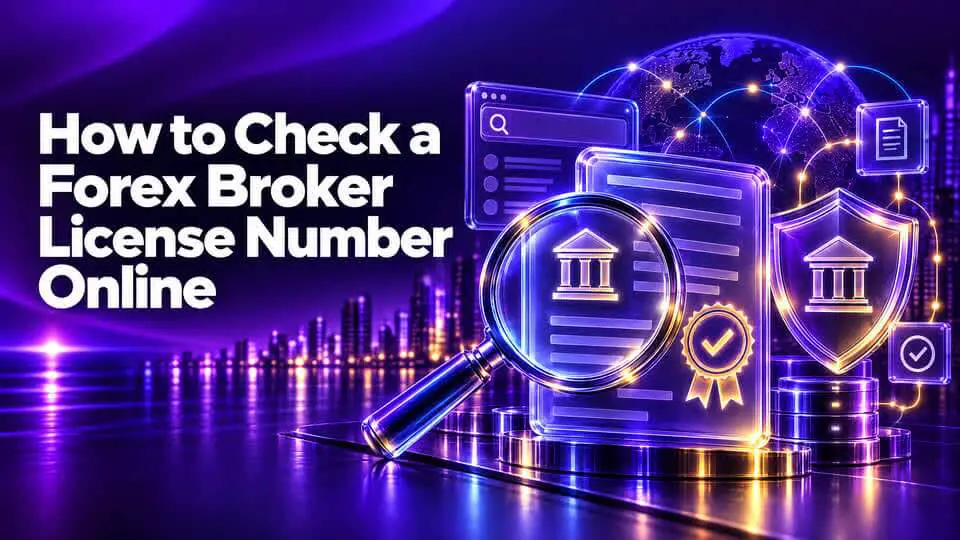
Learning how to check a forex broker license number can help you identify misleading regulatory claims before you open an account or deposit money. Many brokers publish a licence or reference number on their websites, but seeing a number is not proof that the company is authorised to provide forex trading services.
A genuine licence number belongs to a specific legal entity and relates to particular permissions. Fraudulent operators may copy a real firm's name, licence number, address, or registration details to appear legitimate. The Financial Conduct Authority (FCA) warns that clone firms may imitate authorised firms while using different websites and contact details. <Cite refs={["turn232269search1","turn232269search6"]}/>
The safest approach is to locate the regulator's official register, search for the company and licence number, verify the permissions, and match the official contact details with the website you plan to use.
A forex broker licence number is a reference used by a regulator or licensing authority to identify a particular authorised or registered entity. The exact terminology differs by jurisdiction. Some regulators use a firm reference number, while others identify a financial services licence or regulated entity through a different reference.
The number helps you locate a company's record. It does not, by itself, establish that the company is safe, that every product it advertises is authorised, or that your account will receive every possible investor protection.
When checking a licence, distinguish among these details:
These details may all be different. Your task is to establish that they fit together and accurately describe the company that will provide your account.
Start with the broker's official website. Look for its legal, regulatory, or company-information section, usually linked in the footer.
Also review the client agreement, risk disclosure, and account-opening documents. The legal entity named in these documents is often more important than the brand shown on the homepage.
Record the following:
|
Information |
What you need to identify |
|
Brand name |
The broker's public-facing name |
|
Legal company name |
The entity providing the trading account |
|
Regulator |
The authority claimed to supervise the company |
|
Licence number |
The exact number, including letters and punctuation |
|
Official website |
The domain the company claims to use |
|
Registered address |
The address stated in the legal information |
|
Account entity |
The company named in your agreement |
Do not stop once you find a number. A fraudulent website can copy the details of a genuine broker, so every important detail needs independent verification.
Use the regulator's own website rather than relying on the broker's screenshots, review websites, or promotional claims.
Examples of official resources include:
The FCA's register provides information about a firm's authorisation and permissions. ASIC's Professional Registers Search supports searches by company name, licence number, and other identifiers, with details about the firm's status and authorised services. <Cite refs={["turn232269search2","turn232269search0"]}/>
To reduce the chance of visiting a fake register, navigate from the regulator's official homepage if you are uncertain about a search result.
Enter the number exactly as it appears on the broker's website. If the register does not find a result, try the company's full legal name.
Check whether the number belongs to the same legal entity that appears in the client agreement.
For example, a broker website might claim that its company holds a particular licence number. The official register might show that number belongs to a different company with a similar name. That is not enough to verify the broker's claim.
Record the result and inspect:
If the register does not recognise the number, do not assume the licence is genuine. Confirm the spelling, punctuation, and jurisdiction. If the information still cannot be verified, contact the regulator through its official website.
A licence number is only useful if it matches the correct company.
Compare the company name on the broker's website with the regulator's record. Pay attention to legal suffixes such as “Ltd,” “Limited,” “PLC,” or “Pty Ltd.” Similar names may belong to separate legal entities.
Also consider whether the licence belongs to:
A group may have several regulated businesses, but the authorisation of one entity does not automatically authorise every other company in the group.
If the name does not match exactly, ask the broker to explain the relationship and verify that explanation independently.
A number may be genuine even when the firm's status has changed.
The regulator's record may indicate whether a firm is currently authorised, no longer authorised, or has had its permission revoked. Check the current status rather than relying on an old certificate or article.
For FCA-related checks, the Financial Services Register includes current and historical regulatory records, and the FCA advises consumers to avoid dealing with firms whose authorisation has been revoked or cancelled for the relevant activities. <Cite refs={["turn232269search2","turn232269search3"]}/>
Look for:
A historical licence entry is not proof that the company is authorised today.
Not every financial licence permits every product.
A company may be authorised for certain financial services but not for the particular forex or CFD product it is advertising. The terminology and regulatory categories vary by country, so read the regulator's description of the firm's permissions.
Ask these questions:
Do not treat a company registration, general business licence, or payment-services registration as equivalent to authorisation for leveraged trading.
If the register's terminology is unclear, consult the regulator's guidance or contact the regulator directly.
This step is critical because scammers may use a real licence number to impersonate a legitimate company.
Compare the domain, email address, phone number, and address on the broker's website with the regulator's official record. Check the spelling of the domain carefully, including small changes in letters, punctuation, and domain endings.
The FCA warns that clone firms may copy genuine firms' names, addresses, and reference numbers while substituting their own contact information. It advises consumers to use the contact details listed in its official records to confirm they are dealing with the real firm. <Cite refs={["turn232269search1","turn232269search12"]}/>
For example, a scammer could copy a real firm's licence number but replace one letter in the domain name. The licence number may lead to a genuine company in the register, while the website you are visiting belongs to someone else.
If someone contacts you unexpectedly, independently find the genuine company's details and contact it using the verified information. Do not rely on the telephone number, email address, or links supplied by the person who contacted you.
Search the regulator's warning list for the broker's name, domain, phone number, and other known details.
Warnings may identify unauthorised companies, clone firms, or businesses that falsely claim to be regulated. The FCA maintains a warning list of firms and individuals it knows are offering regulated products or services without the required authorisation. <Cite refs={["turn232269search4","turn232269search6"]}/>
However, a missing warning is not proof of legitimacy. A new scam may not yet have been identified or added to a register.
Use warning lists as an additional safety check, not as a substitute for confirming the licence and contact details.
A broker may advertise one licence while offering international clients accounts through a different affiliate.
Before depositing, check the legal entity in the account-opening form and final client agreement. Do not assume the entity advertised on the homepage is the company that will provide your account.
Ask the broker to confirm in writing:
If you live in Bangladesh or another country outside the regulator's home jurisdiction, check whether the entity accepts clients from your country. The licence of an affiliated company may not provide the same protections to an account opened elsewhere.
Even after verifying a licence number, review the protections that apply to your specific account.
Check the terms relating to:
Do not assume that every client is eligible for a compensation scheme or that ordinary trading losses can be reimbursed. Regulatory status is one part of due diligence, not a guarantee of profits or a risk-free deposit.
Be especially cautious if a broker:
A genuine licence number can be copied. The decisive question is whether the company contacting you is the same company authorised by the regulator.
Imagine a broker called “Example Markets” claims to be authorised by a financial regulator.
A careful verification process would look like this:
First, locate the legal company name and licence number in the broker's disclosures.
Second, search the official register by both company name and number.
Third, confirm that the number belongs to the same legal entity and that its authorisation is current.
Fourth, inspect the permissions to confirm that they cover the service being offered.
Fifth, compare the official website, address, and contact information with the website you are using.
Sixth, check warning notices and confirm which company appears in the account agreement.
If the register lists a legitimate company but the website uses different contact details, stop and investigate. A genuine licence entry does not authenticate every website claiming to represent that company.
This example is illustrative and does not describe a particular broker.
Before depositing funds, confirm each item:
If any critical detail cannot be verified, delay the deposit until the discrepancy is resolved.
Find the number and legal company name on the broker's website, then search the regulator's official register. Confirm the current status, authorised services, and contact details.
Different regulators use different numbering systems, and unrelated firms may have similar-looking identifiers. Always check the number in the correct regulator's register and match it to the legal entity.
Do not assume the broker is authorised. It may be a mistake or an attempt to impersonate a legitimate company. Contact the regulator and the genuine company through independently verified details before proceeding.
No. Company registration identifies a business in a corporate register. It does not necessarily authorise the company to provide regulated forex or CFD services.
Yes. Regulation does not eliminate market risk, guarantee profits, or ensure that every dispute will result in compensation. The exact protections depend on the legal entity, product, and applicable rules.
Do not deposit until you can confirm the company's identity and authorisation. Contact the regulator through its official website if the register is unclear.
Knowing how to check a forex broker license number means verifying more than a string of digits. Confirm the legal entity, current licence status, permitted activities, official website, and contact information through the regulator's own records.
Be alert to clone firms, copied licence numbers, and misleading claims about regulation. Verify the entity that will actually provide your account, review its terms, and save the official records before transferring funds.
Risk notice: Regulatory verification can reduce certain risks but cannot eliminate trading losses or guarantee the recovery of funds.