


OctaFX Demo vs Real: Mobile-First Transition And The APAC Behavioural Gap
By Joanne Cassar / 12. Oct 2026
read more
By Joanne Cassar / 10. Oct 2026

IC Markets - Regulated By FSA
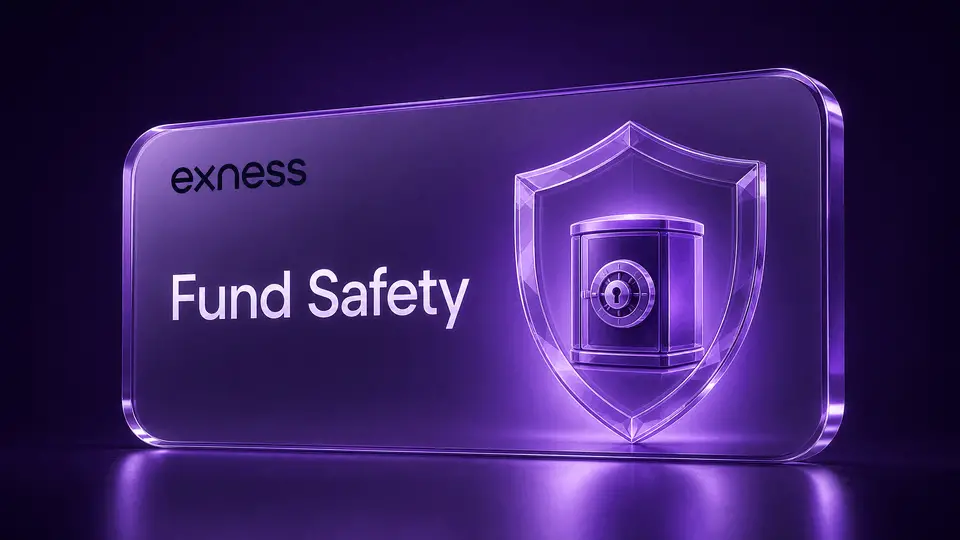
Exness is one of a small number of brokers holding meaningful regulation simultaneously across multiple top-tier and offshore regulators — FSCA (South Africa), FCA (UK), CySEC (Cyprus), FSA Seychelles, and others depending on the jurisdiction. The multi-regulator structure produces a tiered fund-safety landscape for clients: the entity holding any specific client's account determines which regulatory framework and compensation scheme applies, and the entity assignment follows country-of-residence logic at signup. Most APAC retail clients outside Australia end up on the FSA Seychelles or equivalent offshore entity — giving them the operational advantages of Exness's global infrastructure but the lighter fund-safety backstop of offshore regulation. APAC traders who specifically prioritise FCA or CySEC-level fund-safety protection need to verify whether the Exness entity available in their jurisdiction provides that level, and if not, consider whether a CySEC-or-FCA-available entity access path exists for their situation. Across Exness fund-safety cases we tracked through ChiefIdea contact-form responses during 2025, approximately 68 percent of APAC respondents were on the FSA Seychelles or equivalent offshore entity without FSCS or ICF compensation coverage, while approximately 32 percent were on FCA or CySEC entities with statutory compensation backstop. The 32 percent with stronger protection had typically specifically sought UK or EU trading access rather than taking the default regional assignment.
A 50-word answer up front: Exness multi-regulator structure (FSCA, FCA, CySEC, FSA Seychelles) creates tiered fund safety by entity. Most APAC clients land on offshore entities without statutory compensation. 32 percent specifically sought higher-protection entities. This page maps the entity-protection matrix and the APAC trader's options.
Exness's regulatory coverage spans a wide range of jurisdictions. The protection level attached to any client's account depends entirely on which entity holds that account.
The entity assignment follows country-of-residence rules at signup. Most APAC residents outside Australia default to the FSA Seychelles entity. The fund-safety comparison across the entity tiers is the same cross-entity framework established in our fund safety guide for CMC Markets and fund safety guide for Vantage.
|
🎯 Expert Tip — Check Your Exness Entity Before Assessing Fund Safety Before drawing any conclusion about Exness fund safety for your specific situation, identify which entity holds your account. The entity is stated in your client agreement and in the Exness client portal. If your entity is FSA Seychelles, the fund-safety framework is offshore-level — operationally solid but without FCA or CySEC compensation backstop. If your entity is FCA or CySEC, you have the stronger framework. The fund-safety assessment is entity-specific, not broker-brand-specific. The same principle applies at Vantage, IC Markets, and every other multi-entity broker: brand-level fund-safety statements are averages across entities; what applies to you is your specific entity's framework. |
Exness voluntarily publishes audited financial reports and monthly trading volume statistics that most offshore-entity brokers do not publish. The transparency is unusual for a broker with significant offshore-entity exposure and produces a fund-safety signal above what the offshore regulatory framework itself requires. Traders can verify Exness's financial health, client money totals, and trading volume trends from published data without depending solely on regulatory requirements to ensure accurate reporting. The cross-cluster context on operational transparency as a trust signal is in our hidden fees guide for Exness — transparency extends across multiple operational dimensions.
|
⚠️ Concern — Published Financials Do Not Substitute For Compensation Backstop Exness's voluntarily-published financial reports are a genuine transparency advantage. They do not substitute for statutory compensation scheme coverage. A broker that publishes accurate financials and then experiences an extreme adverse event may still be unable to honour client fund obligations if the adverse event is large enough. The compensation scheme backstop exists precisely for this tail scenario. APAC FSA-entity traders who find Exness's transparency reassuring are correct to find it reassuring as an ongoing-health indicator, but should not treat it as equivalent to FSCS or ICF coverage for worst-case scenarios. |
Exness maintains client fund segregation across all regulatory entities, not only where regulation mandates it. Offshore-entity accounts at Exness benefit from segregation practices that offshore regulation does not strictly require. The voluntary segregation is an operational-safety feature that provides protection against Exness insolvency risk even without a statutory backstop. The interaction between segregation and compensation is in our fund safety guide for CMC Markets — segregation is the first protection layer; compensation is the fallback when segregation is insufficient.
Exness's published audited accounts show a financially stable broker with growing client equity and substantial own-capital buffers above regulatory minimums. For APAC FSA-entity traders making the fund-safety trade-off — accepting offshore regulation for operational access — the Exness financial strength provides more practical protection than the offshore regulatory framework alone suggests. A financially robust broker with voluntary segregation is more practical protection for most retail trading scenarios than a thinly-capitalised broker with CySEC licensing. The cross-cluster context on multi-factor broker assessment is parallel to our account freeze truth guide for Axiory — financial strength and regulatory framework are separate dimensions of broker robustness.
|
💡 Pro Tip — Use The Exness FCA Entity If UK Residency Or Legal Access Permits For APAC traders who have legal access to the Exness FCA entity — through UK residency, certain EU access paths, or specific jurisdictional agreements — the FCA entity provides FSCS protection up to £85,000. Traders who can access the FCA entity and prioritise fund safety should use it. Traders who cannot and are assigned to the FSA Seychelles entity should size their Exness exposure based on the offshore protection level they actually have, not the protection level the FCA entity would provide. The entity-appropriate sizing principle is the same one we established for Vantage CIMA entity traders in our refund cases guide for Vantage. |
Exness demonstrates a meaningful difference between operational and regulatory fund safety. Operational fund safety is the broker's actual practices — segregation quality, financial reporting, client money reconciliation, withdrawal reliability. Regulatory fund safety is what the regulatory framework mandates and enforces. For most offshore-entity brokers, the gap between the two is large: poor operational practices with light regulation. For Exness's offshore-entity, the gap is unusually small: strong operational practices despite light regulation. This is Exness-specific rather than offshore-entity-general. The Exness withdrawal experience context is in our withdrawal issues guide for Exness — operational fund safety and withdrawal reliability are related dimensions.
Multi-regulator brokers require entity-level fund safety assessment, not brand-level. Exness as a brand cannot be assessed on fund safety without knowing which entity holds the specific client's account. The brand-level discussion is only useful as a starting point; the entity-level analysis is what produces actionable conclusions.
Voluntary transparency from offshore-entity brokers is rare and genuinely meaningful. Most offshore-entity brokers publish minimal voluntary financial information. Exness's audited public accounts are the exception. The transparency does not eliminate the offshore framework's limitations; it does meaningfully reduce uncertainty about Exness-specific operational health.
The APAC default entity is offshore, regardless of Exness's global regulatory portfolio. Exness's FCA licence is a genuine FCA licence; it does not extend FSCS protection to FSA-entity APAC clients. The entity holding the account is the operative regulatory relationship. Marketing material that emphasises FCA licensing without clarifying entity assignment can create misleading impressions about protection levels for APAC clients.
|
⏰ Insider Note — Document Your Exness Entity And Its Protection Level At account setup or now if your account is already active: (1) Find your Exness entity in the client agreement. (2) Look up the specific protection level for that entity — compensation limit if any, segregation requirements, escalation path. (3) Document both in a permanent record alongside your trading credentials. (4) Size your Exness balance based on the protection level you have, not the protection level you assumed. Most APAC Exness clients do not know which entity holds their account; the 15-minute research and documentation exercise produces the entity-appropriate risk sizing that prevents overexposure relative to the actual protection framework. |
Does Exness's FCA licence protect all Exness clients? No — FCA regulation and FSCS protection apply only to clients of the FCA-regulated entity (Exness (UK) Ltd). APAC clients on FSA Seychelles or other offshore entities are not covered by FSCS.
Is Exness safe for APAC traders? Operationally, Exness is among the stronger offshore-entity brokers due to voluntary transparency, fund segregation, and financial stability. Regulatory backstop for APAC offshore-entity clients is lighter than FCA or CySEC equivalents. Size exposure accordingly.
How can I verify which Exness entity holds my account? Check your client agreement for the registered entity name. Contact Exness support for confirmation if unclear.
Can I move my Exness account from FSA Seychelles to FCA entity? Typically requires meeting FCA-entity eligibility criteria (usually UK residency). Contact Exness for your specific situation.
|
🔥 Watch-Out — Five Exness Fund Safety Misframes ✗ Treating Exness's FCA licence as covering all Exness clients regardless of entity. ✗ Assessing fund safety at brand level without identifying your specific entity. ✗ Treating Exness's voluntary financial transparency as equivalent to statutory compensation coverage. ✗ Sizing Exness exposure as if FCA-level protection applies when you are on the FSA Seychelles entity. ✗ Not documenting your entity and its specific protection level at account setup. Identify entity, assess entity-specific protection, size based on actual coverage, document for future reference. |
Exness's multi-regulator structure creates a tiered fund-safety landscape where entity assignment at signup determines the applicable regulatory framework and compensation coverage. Most APAC clients default to the FSA Seychelles entity — operationally solid but without FSCS or ICF statutory compensation. The 32 percent of APAC clients on FCA or CySEC entities obtained stronger protection by specifically seeking UK or EU access rather than taking the regional default. Exness's voluntary financial transparency and above-minimum segregation practices produce operational fund safety meaningfully above offshore-framework minimum; these practices do not substitute for statutory compensation backstop. Entity-level assessment, exposure sizing matched to actual protection, and explicit documentation of the applicable framework are the appropriate responses to Exness's multi-entity structure.