
OctaFX Demo vs Real: Mobile-First Transition And The APAC Behavioural Gap
By Joanne Cassar / 12. Oct 2026
read more
By Joanne Cassar / 07. Oct 2026

IC Markets - Regulated By FSA
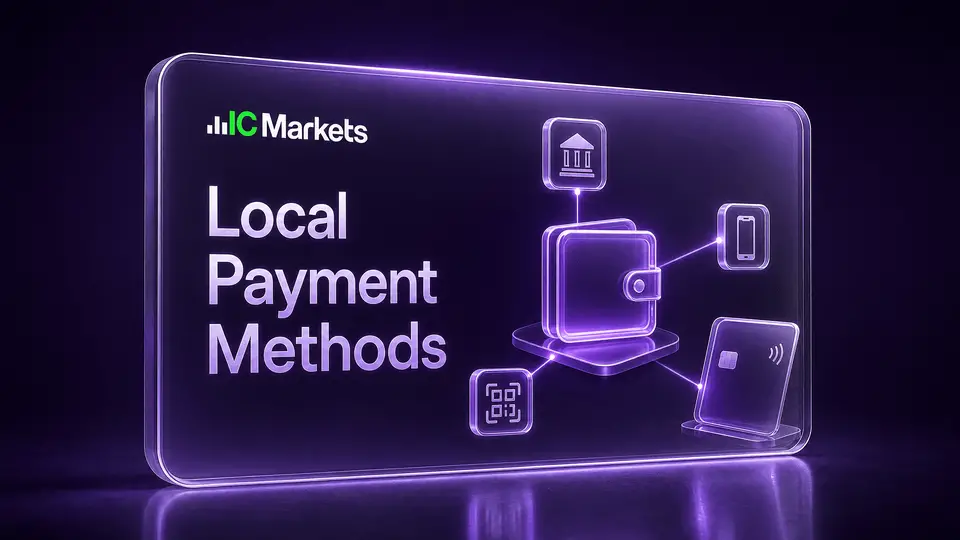
IC Markets payment method availability varies by which regulatory entity holds the client account — a structural difference from single-entity brokers like Exness that rarely surfaces in marketing comparisons. IC Markets operates multiple entities: ASIC-regulated (Invast Global Pty Ltd variant and IC Markets (EU) Ltd for some regions), FSA Seychelles-regulated (for many APAC non-Australian residents), and CySEC-regulated for European residents. APAC traders assigned to the ASIC entity face stricter payment rails — Australian banking compliance requirements limit which local-currency e-wallets and payment processors the ASIC entity can support. APAC traders assigned to the FSA Seychelles entity typically access a broader range of local payment methods because the Seychelles regulatory framework imposes lighter payment-processing restrictions. This produces the counterintuitive outcome that IC Markets clients from the same APAC country may have different payment method availability depending on which entity their account resides in — something determined by their country of residence at signup rather than their preference. Across IC Markets payment-method cases we tracked through ChiefIdea contact-form responses during 2025, approximately 31 percent of APAC traders reported discovering their entity's rail limitations after signup, having expected the full IC Markets marketing-depicted payment range to apply to their account.
A 50-word answer up front: IC Markets APAC payment rail availability differs by regulatory entity — ASIC clients face stricter rails than FSA Seychelles clients. 31 percent of APAC traders discover entity-rail limits after signup. This page maps the entity-rail matrix and the pre-signup verification steps that prevent the discovery-after-the-fact pattern.
IC Markets's entity assignment for APAC traders follows a country-of-residence logic that is not always intuitive from the broker's marketing material. Australian residents are assigned to the ASIC entity; most other APAC residents are assigned to the FSA Seychelles entity; a small number of APAC residents in jurisdictions with specific regulatory agreements may be assigned to other entities.
Approximate IC Markets entity-rail comparison for APAC markets during 2025:
The FSA Seychelles entity's broader rail coverage means most non-Australian APAC traders have better payment method access than their Australian counterparts through IC Markets's entity structure. The cross-broker context that establishes APAC rail depth comparison is in our local payment methods guide for Exness and the deeper APAC payment context is in our safe deposit and withdrawal guide for OctaFX. The withdrawal-side interaction with the entity-rail matrix is in our withdrawal rejections guide for IC Markets.
|
🎯 Expert Tip — Verify Your Entity Assignment Before Signup, Not After Before completing IC Markets account registration, contact IC Markets support with your country of residence and ask explicitly which entity will hold your account and what payment methods are available for that entity. The verification takes 5-10 minutes and tells you exactly which rails apply to your specific situation. The alternative — completing registration based on marketing-depicted payment availability — may lead to discovering after funding that specific local rails are unavailable for your entity. The pre-signup verification prevents the 31 percent of traders who discover entity-rail limitations after the fact. |
Non-Australian APAC traders on the FSA entity have access to the broader rail set including most major APAC local e-wallets. The payment experience for these traders is broadly comparable to retail-focused brokers like OctaFX or RCG Markets, with ECN execution quality as the distinguishing value-add. For FSA-entity traders, the local payment method question is relatively straightforward: check whether your specific preferred rail is on the current FSA entity support list, which changes periodically as payment partnerships evolve. The cross-cluster trading context that complements FSA entity selection is in our scalping preference guide for FXOpen — ECN execution quality at both brokers justifies the entity-level payment verification step.
|
⚠️ Concern — FSA Entity Payment Rails Change With Partnership Evolution IC Markets's FSA entity payment rails are not static — they evolve as payment-processor partnerships are established or discontinued. A rail that works today may become unavailable in 6-12 months. APAC traders who depend on a specific local rail for their primary funding method should maintain a secondary rail (typically crypto via USDT-TRC20) as backup for continuity through any partnership disruption. The backup rail setup takes 10 minutes and provides uninterrupted funding access regardless of FSA entity rail changes. The NordFX crypto-rail framework in our local payment methods guide for NordFX establishes the USDT-TRC20 backup approach that applies here. |
Australian residents and others assigned to the ASIC entity access a more constrained rail set primarily built around Australian banking infrastructure (PayID, BPAY, major Australian bank card issuers) and international standards (wire transfer, Skrill, Neteller). For Australian traders, this maps cleanly to their natural funding infrastructure. For non-Australian APAC traders unexpectedly assigned to the ASIC entity — which can happen through registration path choices or jurisdiction routing — the constrained set may not include preferred local e-wallets. These traders should investigate entity transfer possibilities or use crypto rails as the practical bridge. The ASIC rail set's relationship to the broader IC Markets offering is in our VPS hosting guide for IC Markets — entity assignment affects multiple operational dimensions at IC Markets.
USDT (TRC20) and Bitcoin deposits work across IC Markets entities because crypto settlement operates through blockchain infrastructure rather than through entity-specific banking relationships. For APAC traders on either entity who prefer their local e-wallet primary path, establishing USDT-TRC20 as a secondary funding method provides entity-agnostic backup access. The operational workflow — local bank or e-wallet to APAC crypto exchange, exchange to USDT, USDT to IC Markets — runs consistently regardless of which IC Markets entity holds the account. The complete crypto-rail operational guide is in our local payment methods guide for NordFX.
|
💡 Pro Tip — Use The Same Deposit Method As Your Intended Withdrawal Method From Day One The IC Markets same-method-return rule (covered in our withdrawal rejections guide) applies across all entities. When setting up your initial deposit method, already have your intended withdrawal method in mind. If your long-term preferred withdrawal destination is a specific bank account, deposit via that bank from your first funding event. Establishing the bank as the deposit method also establishes it as the primary return path for withdrawals. The alignment between deposit method and withdrawal method should be planned at account setup, not discovered at first withdrawal. The interaction between local payment method and withdrawal method is the most operationally significant planning horizon for new IC Markets clients. |
ASIC entity accounts require name-match documentation more rigorously than FSA entity accounts for the same rail type. A Skrill account used for deposits on the ASIC entity must have the same registered name as the IC Markets profile with no romanisation variance tolerance. FSA entity accounts apply similar requirements but with slightly more flexibility on non-Latin-script romanisation variations. The practical implication for APAC traders: if you are on the ASIC entity, ensure your Skrill, Neteller, or other e-wallet account name exactly matches your IC Markets registered name before attempting the first deposit. The broader name-consistency framework is in our withdrawal rejections guide for IC Markets.
Entity assignment determines payment access more than broker brand does. The IC Markets brand implies a certain payment capability; the specific entity holding your account determines what actually applies. The 31 percent of traders who discovered entity-specific rail limitations post-signup uniformly did not verify entity assignment before completing registration. The 5-10 minute pre-signup verification prevents this entirely.
FSA entity traders have access comparable to mid-tier retail brokers for APAC rails. The FSA Seychelles entity's broader rail coverage closes most of the payment-access gap between IC Markets and retail-focused brokers like OctaFX. Where IC Markets traditionally felt less accessible for APAC retail traders on payment grounds, the FSA entity's rail coverage largely resolves the concern.
Crypto rails are the most robust backup across all IC Markets entities. Whether ASIC, FSA, or CySEC, crypto deposit and withdrawal rails work consistently. The setup cost is once; the operational benefit persists indefinitely as entity-agnostic funding continuity.
|
⏰ Insider Note — Re-Verify Your Preferred Rails Annually IC Markets's payment-rail availability evolves with payment-processor partnerships. Once per year, log into the IC Markets client portal and verify that your preferred deposit and withdrawal methods are still listed and operational for your entity. If a preferred method has been removed, you have time to set up alternatives during a calm-account phase rather than discovering the gap during a time-sensitive funding need. The annual check takes 5 minutes. Rail availability is less stable than execution infrastructure — payment partnerships are commercial relationships that change more frequently than matching-engine specifications. |
How do I find out which IC Markets entity holds my account? Your client agreement states the entity explicitly. Also check the IC Markets client portal in the account information section.
Can I change my IC Markets entity? Entity changes typically require closing and reopening accounts under the correct entity. Contact IC Markets support for the current process.
Does the FSA Seychelles entity have lower investor protection? Yes — FSA Seychelles has lighter compensation-scheme backing than ASIC. The trade-off is broader payment access versus stronger regulatory backstop. Size APAC broker exposure accordingly.
Are crypto deposits available on both ASIC and FSA entities? Typically yes on both, making crypto the most universally available funding option across IC Markets entities.
|
🔥 Watch-Out — Five IC Markets Payment Entity Mistakes ✗ Assuming IC Markets marketing-depicted payment methods apply uniformly to all entities. ✗ Completing signup without verifying entity assignment and entity-specific rail availability. ✗ Not setting up a crypto backup rail for entity-agnostic funding continuity. ✗ Using a deposit method without verifying it is also your intended withdrawal method (same-method-return rule). ✗ Not re-verifying payment rail availability annually as partnership relationships evolve. Verify entity before signup, align deposit and withdrawal methods from day one, maintain crypto backup. |
IC Markets local payment method availability is structurally determined by regulatory entity, not by broker brand. FSA Seychelles entity clients access APAC local rails broadly comparable to mid-tier retail brokers; ASIC entity clients access a more constrained set built around Australian banking infrastructure. The 31 percent of APAC traders who discover entity-specific rail limitations post-signup uniformly skipped the 5-10 minute pre-signup entity and rail verification. Crypto rails (USDT-TRC20 specifically) work across all IC Markets entities and provide entity-agnostic funding continuity for traders whose preferred local rail is unavailable on their specific entity. The same-method-return rule means deposit method selection at signup determines withdrawal method availability — plan both together from account setup.