



Forex Broker Hidden Fees: 12 Costs to Check in 2026
By Joanne Cassar / 18. Oct 2026
read more
By Joanne Cassar / 17. Oct 2026

IC Markets - Regulated By FSA
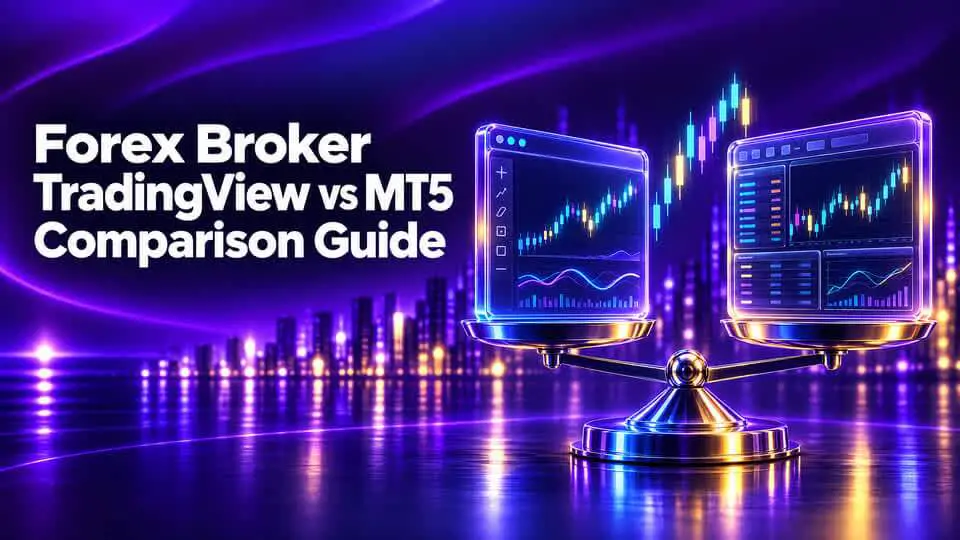
Choosing between TradingView and MetaTrader 5 (MT5) is an important decision when selecting a forex broker. Your trading platform affects how you analyze price movements, place orders, manage positions, use indicators, and automate strategies.
A useful forex broker TradingView vs MT5 comparison should consider more than chart appearance. It should examine broker compatibility, order management, technical analysis, algorithmic trading, account costs, and the instruments available through the connected broker.
TradingView is known for its browser-based charts, technical analysis tools, and integrated trading interface with supported brokers. MT5 is a multi-asset trading platform with extensive order functionality, technical indicators, algorithmic trading tools, and support for trading robots. The official platform documentation describes these different strengths. (TradingView, MetaTrader 5)
Neither platform is automatically better for every trader. The right choice depends on your strategy, preferred workflow, broker's supported features, and trading requirements.
TradingView is a charting and trading platform that supports technical analysis, watchlists, indicators, drawing tools, alerts, and connections to supported brokers and exchanges.
Traders can use its charts to study markets and, where a compatible broker connection is available, place and manage trades through the interface. TradingView states that it acts as an interface for connected broker trading rather than processing trades itself. (TradingView)
Common reasons forex traders choose TradingView include:
Not every forex broker supports direct TradingView trading. A broker may offer TradingView charts on its own website without supporting a direct connection to the main TradingView platform. Confirm the exact integration before opening an account.
MetaTrader 5 is a trading platform developed by MetaQuotes. It supports forex and other asset classes offered by connected brokers, along with technical and fundamental analysis, order management, algorithmic trading, and copy-trading features.
Its major capabilities include:
The official MT5 documentation describes its order systems, analytical tools, and automated-trading environment. (MetaTrader 5, MQL5)
MT5 is particularly relevant for traders who rely on Expert Advisors, customized trading tools, or a workflow centered on automated execution and trade management.
|
Feature |
TradingView |
MetaTrader 5 |
|
Main strength |
Visual analysis and charting workflow |
Trading, automation, and order management |
|
Charting |
Extensive chart layouts and drawing tools |
Detailed charts and technical analysis tools |
|
Indicators |
Built-in and community-created tools |
Built-in indicators and additional MQL5 tools |
|
Custom scripting |
Pine Script |
MQL5 |
|
Automated strategies |
Possible through supported integrations and external systems |
Expert Advisors run within the MT5 ecosystem |
|
Broker connection |
Only supported brokers and integrations |
Brokers that offer MT5 accounts |
|
Direct trade placement |
Available through supported connections |
Available through the connected broker |
|
Copy trading |
Features depend on the broker or integration |
Built-in Signals and other supported copy-trading services |
|
Strategy testing |
Depends on tools and workflow |
Built-in strategy testing and optimization |
|
Desktop and mobile |
Web, desktop, and mobile options |
Desktop, web, and mobile options |
|
Costs |
Subscription or other feature costs may apply; broker costs are separate |
Platform access is commonly free; broker and trading costs remain |
|
Best fit |
Traders who prioritize charting and visual analysis |
Traders who prioritize native automation and detailed trade management |
Features can vary by software version, subscription, broker, account type, and integration. This table compares general platform capabilities rather than guaranteeing that every feature is available with every broker.
Charting is a major reason traders compare TradingView with MT5.
TradingView offers a visual analysis environment with customizable charts, drawing tools, indicators, alerts, and watchlists. It can suit traders who prefer to study several markets in a browser and develop chart-based trading plans.
Its community indicators and Pine Script environment can also help users develop or adapt chart-analysis tools.
MT5 provides technical charts, built-in indicators, analytical objects, and additional tools through the MQL5 ecosystem. It also supports a broad range of timeframes and multiple open charts in the desktop terminal. (MetaTrader 5)
TradingView may be a better fit if you prioritize a visual charting workflow, custom layouts, and easy access to analysis across devices.
MT5 may be preferable if you want analysis and trade management integrated with the same platform you use for Expert Advisors and other automated tools.
Neither platform guarantees more accurate trading decisions. The quality of your analysis depends on the data, methodology, and execution of your strategy.
Automation is one of the most important differences.
Pine Script allows users to create indicators and strategies for chart analysis and backtesting within TradingView's environment.
However, creating a strategy on a chart does not automatically mean it will execute live orders through every broker. Live automation may require a supported broker integration, an external execution service, alerts, or other infrastructure.
Traders should confirm which parts of their strategy can actually be automated and whether the workflow introduces additional costs or reliability concerns.
MT5 supports Expert Advisors, which can analyze market data and execute trading logic through the platform. Its MQL5 environment includes tools for developing, testing, debugging, and optimizing automated systems. (MQL5)
This can make MT5 a practical choice for traders who want native algorithmic trading within the platform.
If your strategy depends on MT5 Expert Advisors, MQL5 tools, or the MT5 testing ecosystem, MT5 is generally the more direct option.
If your workflow begins with TradingView charts and Pine Script, TradingView may be more convenient for analysis and strategy development. You must still verify how live orders will be executed.
Backtested results are not a guarantee of future performance. Slippage, spreads, latency, and market conditions can cause live results to differ from simulations.
Platform choice is not useful if your preferred broker does not support the connection you need.
TradingView supports trading through selected broker integrations. The available list and supported functions can vary by region and broker. Its documentation recommends checking the supported broker options from the trading interface. (TradingView)
MT5 is widely offered by forex brokers, but you still need an MT5-enabled account and the correct broker server details.
Before choosing a platform, confirm:
A broker's statement that it supports “TradingView charts” does not necessarily mean you can connect that account to TradingView and trade directly.
Some traders assume that one platform always provides faster execution. That is not a reliable general rule.
Execution speed depends on multiple factors, including:
TradingView describes its trading interface as a way to connect to supported brokers, while MT5 sends trading operations through the connected broker's infrastructure. Platform choice alone does not establish which will execute a particular order faster.
If execution speed is critical to your strategy, test the broker's actual environment with a demo account where possible, review the broker's execution policy, and examine realistic slippage and rejection data.
When comparing TradingView and MT5, separate platform-related expenses from the cost of trading.
|
Cost |
What to check |
|
Platform subscription |
Whether the features you need require a paid TradingView plan or another subscription |
|
Spread |
The difference between bid and ask prices on your broker's account |
|
Commission |
Per-lot or transaction fees |
|
Overnight financing |
Swaps or other holding charges |
|
Slippage |
Difference between expected and actual execution price |
|
Currency conversion |
Costs when your account and trading currencies differ |
|
Automation tools |
Paid indicators, Expert Advisors, VPS hosting, or third-party services |
MT5 is commonly available to traders without a separate platform licence fee, while broker charges still apply. TradingView may offer free and paid plans with different feature limits, but those subscription costs are separate from broker trading costs.
A paid charting plan does not guarantee better execution, lower spreads, or more profitable trades. Likewise, free platform access does not mean the connected broker offers inexpensive trading conditions.
Both platforms provide ways to access trading tools from mobile devices and computers.
TradingView can be convenient for traders who want to switch between browser-based analysis and mobile chart monitoring. MT5 offers desktop, web, and mobile versions, with available features differing by version. (TradingView, MetaTrader 5)
When comparing mobile functionality, check whether your required features work on the device you actually use. Some advanced charting, scripting, automation, and order-management functions may be easier to access on desktop.
If you run an automated strategy, remember that the platform and execution environment must remain available as required. MT5 supports virtual hosting for some continuous automated-trading workflows, while other setups may need separate infrastructure.
|
Trader type |
Potential fit |
Reason |
|
Beginner |
Either |
Choose based on usability, education, and broker compatibility |
|
Technical analyst |
TradingView |
Strong visual charting and analysis workflow |
|
MT5 Expert Advisor user |
MT5 |
Native MQL5 automation and strategy testing |
|
Manual scalper |
Either |
Execution conditions and broker costs matter more than appearance |
|
Swing trader |
Either |
Charting, alerts, order management, and financing costs are important |
|
Strategy developer |
Depends on coding environment |
Pine Script and MQL5 serve different workflows |
|
Copy trader |
Depends on the broker and service |
Copy-trading availability and fees vary |
|
Multi-device trader |
Either |
Compare the specific features available on desktop, web, and mobile |
These are general guidelines, not strict rules. Many traders use TradingView for analysis and a separate broker terminal for order execution.
Yes, where your workflow and broker support it.
A trader might use TradingView to analyze market structure, create alerts, and identify potential setups, then place trades in MT5. Another trader might use MT5 for both analysis and execution to keep everything in one environment.
A combined setup can provide flexibility, but it introduces a potential operational risk: the chart and execution platform may display different prices or use different symbol specifications.
Before acting on a TradingView chart, confirm the symbol, broker feed, contract size, spread, and execution price in the platform where the order will be placed.
Use this checklist before opening a live account.
A platform brand is not a substitute for checking the broker itself. Verify the exact company named in your account agreement, particularly when a group operates through multiple legal entities.
TradingView may suit traders who prioritize charting, visual analysis, and alerts. MT5 may be better for users who rely on native Expert Advisors, MQL5 tools, and integrated order management. The right choice depends on your workflow and broker support.
MT5 is commonly provided without a separate platform access fee, but the connected broker may charge spreads, commissions, overnight financing, or other fees. Paid third-party tools may also add costs.
Yes, through supported broker integrations. Availability and functions depend on the broker, account, region, and integration. Chart access alone does not guarantee direct trading capability.
There is no universal answer. Execution depends on the broker's infrastructure, network conditions, liquidity, order type, and other factors. Compare real execution conditions rather than relying on platform branding.
MT5 is a direct choice for strategies built around Expert Advisors and MQL5. TradingView can be useful for Pine Script analysis and alerts, but live execution may require a supported integration or additional infrastructure.
Yes. Many traders use one for analysis and the other for execution, provided their broker and workflow support that arrangement. Verify that the chart's prices and the execution platform's symbol specifications match closely enough for your strategy.
Either can work. Beginners should prioritize learning order types, risk management, position sizing, and broker terms instead of assuming that a particular platform will make trading easier or more profitable.
The best choice in a forex broker TradingView vs MT5 comparison depends on what you need from your trading environment.
Choose TradingView if its charting, alerts, and analysis workflow fit your approach and your broker supports the integration you need. Consider MT5 if you require native Expert Advisors, MQL5 tools, and integrated automated-trading functionality.
Whichever platform you choose, compare the broker's legal entity, trading costs, execution terms, available instruments, and payment conditions. Platform convenience matters, but it should never replace careful broker verification and risk management.
Risk notice: Forex and CFD trading involves substantial risk, and leverage can magnify losses. No charting platform, indicator, or automated system guarantees profitable results. This article is for educational purposes and is not financial advice.