


OctaFX Demo vs Real: Mobile-First Transition And The APAC Behavioural Gap
By Joanne Cassar / 12. Oct 2026
read more
By Joanne Cassar / 26. Sep 2026

IC Markets - Regulated By FSA
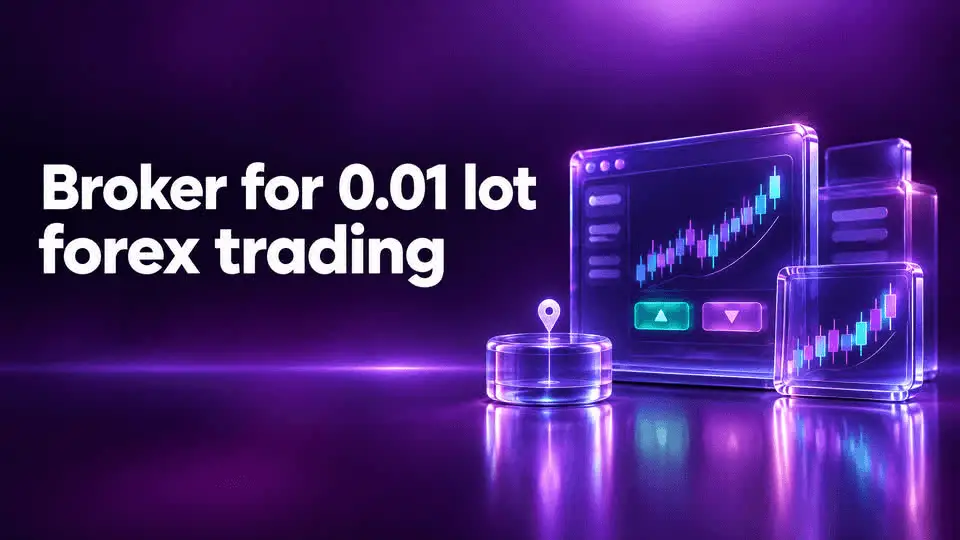
The 0.01 lot is the most common minimum trade size in retail forex and the size where most traders begin. It is small enough to keep risk manageable on modest accounts, yet large enough to be supported by nearly every mainstream platform. But choosing a broker for 0.01 lot trading involves more than confirming that the minimum size exists. Spreads, commissions, leverage rules, execution quality, and regulation all determine whether small trades are cost-effective and safe.
This guide explains what a 0.01 lot means, how to calculate risk and margin, the broker features that matter, and how to verify a broker's regulation before you start.
On most platforms, 1.00 lot represents 100,000 units of the base currency. A 0.01 lot therefore equals 1,000 units, which is called a micro lot. For EUR/USD in a USD-denominated account, one pip is worth approximately $0.10 on a 0.01 lot.
Pip values change with the currency pair and account currency. For example, pairs quoted against the Japanese yen or those where USD is the base currency have different per-pip values, so use your platform's calculator to confirm.
Margin is the amount of your balance set aside to hold a position. It is calculated as position value divided by leverage.
For a 0.01 lot of EUR/USD, the position value is about 1,000 EUR (roughly $1,080 at an exchange rate of 1.08, for illustration).
Higher leverage reduces margin but does not reduce the risk of loss per pip. Your loss per pip is fixed by position size, so leverage mainly affects how many positions you can open and how quickly the account can reach margin call or stop-out when several trades are open. Choose leverage that fits your risk plan, not the maximum available.
On small positions, per-trade cost is modest, but the cost as a percentage of expected profit is what matters. Compare:
Calculate the total cost per round trip for your typical trade, including the spread and any commission.
Since 0.01 lot traders commonly have small balances, deposit and withdrawal fees, inactivity fees, and currency conversion charges can be significant. Review the full fee schedule.
Even at small size, requotes, slippage, and slow fills affect results. Look for market execution, clear slippage policy, and stable performance during news events. Test with small live trades if you can.
MT4 and MT5 support 0.01 lots and offer expert advisors, indicators, and mobile apps. cTrader and some proprietary platforms also support small sizes. Check for one-click trading, position sizing tools, and stable mobile access.
Prefer brokers that let you adjust leverage and that disclose margin call and stop-out levels clearly.
Verify that the protection applies to your entity and account type, and that it is written in the client agreement.
Some accounts restrict scalping, hedging, news trading, or EAs. Confirm that your strategy is allowed on the account you choose.
Reliable, low-cost payment methods matter. Check processing times, fees, and minimum withdrawal amounts.
Suppose you have a $300 account and risk 1% per trade, which is $3.
This is why a broker that allows sizes below 0.01, such as a cent account, can help very small accounts follow proper risk rules.
Because 0.01 lot trading is where most new traders start, this is also where scam brokers target them. Use this process to verify a broker before you deposit.
Look in the terms, footer, or legal documents for the company name, registration number, and regulator. Confirm which entity will onboard you.
Search on the regulator's own website. Examples include the UK FCA Register, ASIC's registers in Australia, the CySEC register for Cyprus and EU passporting, the FSCA in South Africa, and NFA BasiQ in the United States. Verify the exact company name, license number, website address, and status.
Ensure the license covers retail forex or CFD services and that no restrictions apply.
Check client fund segregation, negative balance protection, and investor compensation eligibility. Different entities of the same brand can offer very different protection.
Search regulator warning pages and reputable investor-protection alerts. Compare the broker's website domain, phone numbers, and addresses with those listed by the regulator.
Look for recurring themes such as delayed withdrawals or sudden account restrictions. A single complaint proves little; consistent patterns matter.
Start with a small amount and try a withdrawal before scaling.
Small positions make an excellent, low-cost testing tool. Follow a simple routine over two to four weeks:
Only increase position size once the broker has proven consistent on execution, transparency, and payments.
Small positions can create a false sense of safety that encourages over-trading. Ten simultaneous 0.01 positions equal a 0.10 lot exposure, with ten times the pip value. Track your total open lot size, not just the size of each individual trade, and set a daily loss limit so a bad session cannot drain the account.
How much is a 0.01 lot in dollars? It represents 1,000 units of the base currency. On EUR/USD, each pip is about $0.10 for a USD account.
Can I trade 0.01 lots with a $50 account? Often yes, but risk control is tighter. Use conservative stops and consider whether a cent account offers better sizing.
Is 0.01 lot the smallest size in forex? For most brokers, yes. Some offer smaller effective sizes via cent accounts or special platforms.
Do spreads differ for 0.01 lots? The quoted spread in pips is generally the same, but total cost scales with position size and may include commissions.
Are 0.01 lot accounts safe? Safety depends on regulation and broker conduct, not on lot size. Always verify the legal entity on the official register.
The best broker for 0.01 lot trading offers transparent costs, flexible leverage, negative balance protection, reliable execution, and verified regulation. Compare total trading costs rather than headline spreads, size positions according to your risk plan, and check the regulator's own register before depositing funds.
This article is for educational purposes only and does not constitute financial or investment advice. Forex trading carries a high level of risk and may not be suitable for all investors. Verify regulatory status directly with the regulator.