


OctaFX Demo vs Real: Mobile-First Transition And The APAC Behavioural Gap
By Joanne Cassar / 12. Oct 2026
read more
By Joanne Cassar / 26. Sep 2026

IC Markets - Regulated By FSA
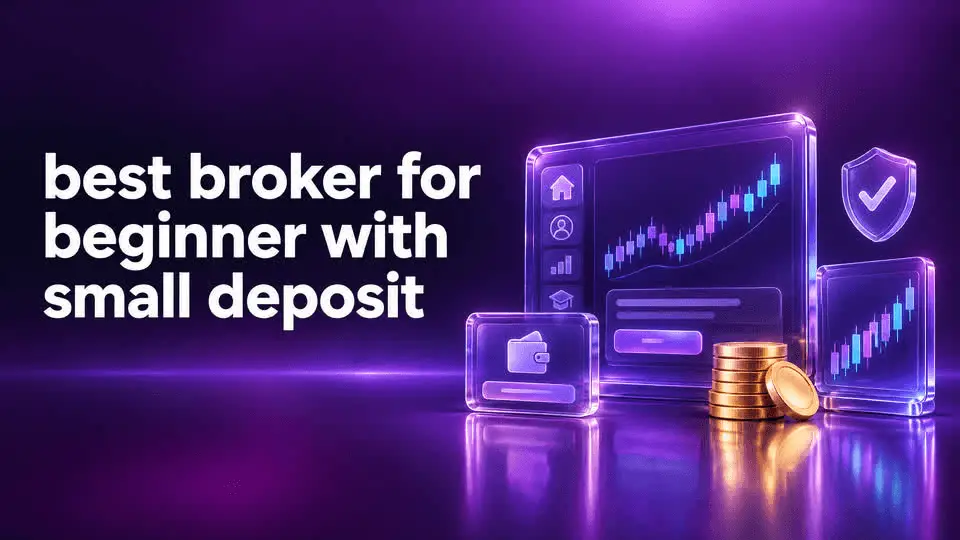
Starting forex with a small deposit is entirely possible, but the choices you make in the first few weeks, especially your broker, will shape whether you learn sustainable habits or lose your deposit quickly. Beginners often choose brokers based on advertisements, bonuses, or a friend's recommendation. A better approach is to use a checklist built around what actually protects a small account: regulation, cost transparency, sensible position sizing tools, and quality education.
This guide sets out what a beginner with a small deposit should look for, how to plan the first three months, the mistakes to avoid, and a Forex Broker Regulation Checker Guide to verify any broker before you fund an account.
A suitable broker for a beginner with a small deposit generally has:
A small deposit is a learning budget. Most beginners lose money in their first year, and the traders who improve are those who treat the early months as practice: small positions, strict risk limits, and a written journal. Do not deposit money you cannot afford to lose, and do not borrow to trade. If a broker, community, or "coach" promises consistent or guaranteed profits, treat it as a warning sign.
This is the most important feature. A regulated broker is subject to rules about client fund handling, disclosures, complaints, and conduct. Check the exact legal entity that will hold your account, because large brands frequently operate several entities with different levels of protection. The checker guide below explains how.
A low minimum deposit lets you start small, but read the fee schedule. Deposit fees, withdrawal fees, conversion fees, and inactivity fees hit small accounts hardest. A $5 fee on a $100 account is a 5% cost before you place a single trade.
Beginners should trade micro lots (0.01) or smaller. On a cent account, the effective real-money risk of the minimum position is smaller still. This allows you to follow a 1% risk rule even on a small balance, which is difficult on standard accounts with larger minimums.
A demo account lets you practice without risk. Use it to learn the platform, test your strategy, and confirm the broker's conditions. Keep in mind that demo execution can be smoother than live execution, so move to a small live account after demo practice to experience real fills.
Beginners should compare the total cost of trading, not just the advertised spread. Look at:
High leverage looks attractive but increases the speed of losses. Choose a broker that lets you reduce leverage and that provides negative balance protection in writing.
Useful beginner resources include articles, video lessons, a glossary, webinars, and platform tutorials. Beware of educational content that is just disguised marketing for risky products or aggressive deposit bonuses. Responsive support, ideally in your language, matters when you have deposit or platform questions.
MT4 and MT5 are widely supported and have large communities and tutorials. Test the mobile app, since many beginners monitor trades on their phones.
Deposit bonuses can look generous but often come with trading-volume requirements, restrictions on withdrawals, and limits on strategies. A bonus can lock your funds. If you use one, read the terms carefully and confirm how and when profits and the deposit can be withdrawn. Many beginners are better off declining bonuses and keeping their account simple.
Small deposits make you an attractive target for scams, especially those advertised on social media. Follow this process before depositing.
In the broker's terms and conditions or footer, find the company name, registration number, address, and regulator. Identify which entity will serve your country of residence.
Use the regulator's own website. Examples include the FCA register (UK), ASIC (Australia), CySEC (Cyprus/EU), FSCA (South Africa), and NFA BasiQ (United States). Match the company name, license number, website, and status exactly.
Confirm the license covers dealing in or arranging forex or CFDs and that it is active.
Ask which entity holds your account, whether client funds are segregated, whether negative balance protection applies, and whether a compensation scheme covers you. Offshore entities often provide weaker protection than entities licensed by major regulators.
Search the regulator's warning pages. Clone firms copy legitimate names and license numbers but use different domains, so compare the website address and contact details.
Look for consistent patterns about withdrawals, account restrictions, and customer service.
Fund a small amount, trade the smallest size, and request a withdrawal. The process should be clear, timely, and consistent with the terms.
How much money do I need to start forex as a beginner? It depends on the broker, but many allow small starts, and some offer cent accounts with very low minimums. Start with an amount you can afford to lose entirely.
Should beginners use a cent account? Often yes, because it allows very small positions and finer risk control. Check any execution differences or restrictions.
Is a demo account enough to learn forex? It is useful for learning the platform and testing strategy logic, but live trading with small size is needed to experience real execution and emotions.
Do beginners need a bonus? No. Bonuses often come with withdrawal restrictions, so many beginners are better without them.
Can I get rich quickly with a small deposit? That is unrealistic. Treat a small account as a way to learn risk management and process.
The best broker for a beginner with a small deposit is a verifiably regulated broker with low fixed fees, micro or cent position sizing, a free demo account, negative balance protection, transparent costs, and useful education. Start small, use a written plan, keep a journal, and check regulation on the official register before you deposit.
This article is for educational purposes only and does not constitute financial or investment advice. Forex trading carries a high level of risk and may not be suitable for all investors. Verify regulatory status directly with the regulator.