


OctaFX Demo vs Real: Mobile-First Transition And The APAC Behavioural Gap
By Joanne Cassar / 12. Oct 2026
read more
By Joanne Cassar / 27. Sep 2026

IC Markets - Regulated By FSA
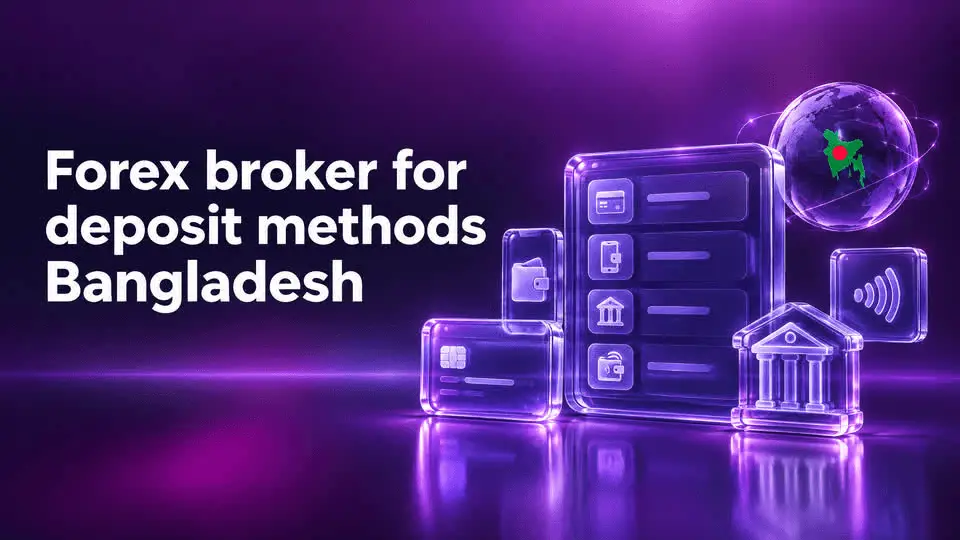
For Bangladeshi traders, funding a forex account is often harder than trading it. Broker websites list dozens of deposit options, but many of them are unavailable, unreliable, or unsuitable for clients in Bangladesh, and some carry legal or safety risks that never appear in the marketing. This is also where most Bangladeshi retail traders lose money to scams, not through bad trades but through bad payment arrangements.
This guide explains the main categories of deposit methods, what problems commonly arise with each, the hidden costs to watch for, and how to check that you are paying the right entity. It ends with a Forex Broker Regulation Checker Guide focused on verifying payees and payment safety. It does not describe workarounds for avoiding local rules, and it does not tell you which method is lawful for you, because that is a question for a qualified professional.
Bangladesh Bank regulates foreign exchange, and the Foreign Exchange Regulation Act, 1947 restricts payments to persons outside Bangladesh and dealings in foreign exchange outside authorized channels. Bangladesh Bank has issued warnings against unauthorized online forex trading, and its stated position is generally understood to be restrictive for residents sending money abroad for speculative trading.
Reports suggest that banks may block or flag payments to overseas forex brokers, and that some payment routes commonly used in the market can breach the terms of the payment provider or local rules. Enforcement patterns may change. Before using any deposit method, seek advice from a qualified Bangladeshi lawyer or your authorized dealer bank, and check official Bangladesh Bank notices. This article is educational and is not legal advice.
Brokers commonly list some combination of:
Which of these are truly available to you depends on the broker, the entity serving you, your bank, and current rules. A method displayed on a website may be unavailable at the point of payment, and a method that works today may stop working tomorrow.
How it works: You send funds from your bank account to the broker's bank account abroad.
Potential advantages: Payments go to a named corporate bank account, creating a clear paper trail. Larger amounts are easier.
Typical issues: Banks in Bangladesh may require documentation and may decline or flag transfers for speculative trading. Intermediary bank fees, exchange-rate markups, and delays of several days are common. You may need to explain the purpose of the transfer.
How it works: You pay the broker with a card, sometimes in a foreign currency.
Typical issues: Reports indicate that Bangladesh Bank rules and issuing banks restrict use of cards for certain foreign transactions, and card use may count against limits on foreign currency spending. Cards may be declined, and repeated attempts can trigger account flags. Card deposits also can affect how withdrawals are handled, since brokers often require refunds to the original card first.
How it works: You fund an international e-wallet, then transfer to the broker.
Typical issues: Wallet providers' terms may restrict use for forex funding or for users in certain countries, and accounts can be frozen or closed without warning. Funding the wallet in the first place may itself involve a difficult local step. Fees and conversion rates can be high.
How it works: You send digital assets to a wallet address provided by the broker or a processor.
Typical issues: The regulatory stance on crypto in Bangladesh is unclear and restrictive, so obtaining and moving crypto can raise its own legal and banking issues. Transfers are irreversible; sending to the wrong address or a fake page means permanent loss. Price volatility between sending and crediting can change the amount received.
How it works: The broker or a payment intermediary provides local payment options, sometimes involving local mobile financial services.
Typical issues: You may be paying a third party that is not the broker. Intermediaries may not be licensed to handle such payments, and disputes can be hard to resolve. If the payee name on the payment page differs from the broker's legal entity, treat that as a serious warning.
How it works: A local person or "agent" receives your taka and arranges to credit your trading account.
Typical issues: This is the highest-risk category. You have no legal protection if the agent disappears or the broker denies receipt. Such arrangements may breach foreign exchange rules, and they are a common feature of scams. Deposits made via third parties can also cause KYC and withdrawal problems, because brokers require funds to come from accounts in your own name.
Even where a method works, the effective cost can be significant:
Example: You deposit the taka equivalent of $100. A 2% exchange markup costs $2, a 1.5% processor fee costs $1.50, and a fixed $3 bank fee brings the total to $6.50 before you make a single trade. That is 6.5% of your capital.
Before paying, ask:
Keep:
These records help with disputes, tax reporting, and any questions from your bank.
Verifying regulation and verifying the payee are two separate checks. Do both.
Find the company name, registration number, and address. This is the entity that should receive your funds.
Search the regulator's own website. Examples include the FCA register (UK), ASIC (Australia), CySEC (Cyprus/EU), FSCA (South Africa), and NFA BasiQ (United States). Match the name, license number, website, and status.
Compare the account holder name on the bank details or payment page with the entity you verified. If they differ, ask support to explain in writing why, and be cautious about proceeding.
Ask whether client funds are held in segregated accounts and which protections apply to your account.
Look for the broker's domain on regulator warning lists. Confirm that the payment page is on the official domain, not a look-alike.
Pay a small amount first and confirm it is credited correctly and on time.
Withdraw a small amount to confirm the reverse route works before adding more.
Which deposit method is best for Bangladeshi traders? There is no universally safe or authorized method. Prioritize routes that pay a verified broker entity from an account in your name, and get legal and banking advice about what is permitted.
Can I deposit using mobile banking? Be cautious. Local mobile payment routes involving personal numbers or third-party agents are common in scams, and their use for this purpose may breach rules.
Why was my card payment declined? Issuing banks may block or limit international payments to certain merchants or category codes, and local rules can affect card use abroad. Ask your bank.
Is crypto a safe way to deposit? It carries irreversible-transfer risk, price volatility, and unclear legal treatment locally. It is not inherently safer than other routes.
Can someone else deposit for me? Third-party deposits commonly cause KYC and withdrawal problems, and they are a frequent scam feature. Avoid them.
Choosing a deposit method is a legal, financial, and safety decision, not just a convenience choice. Check that the payee matches the verified broker entity, pay only from accounts in your name, calculate the total cost, keep records, and test with a small amount. Take advice from a qualified local professional about which channels are permitted.
This article is for educational purposes only and does not constitute legal, tax, financial, or investment advice. Forex trading carries a high level of risk. Laws and enforcement in Bangladesh may change, so check official Bangladesh Bank notices and consult a qualified local professional.