

OctaFX Demo vs Real: Mobile-First Transition And The APAC Behavioural Gap
By Joanne Cassar / 12. Oct 2026
read more
By Joanne Cassar / 28. Sep 2026

IC Markets - Regulated By FSA
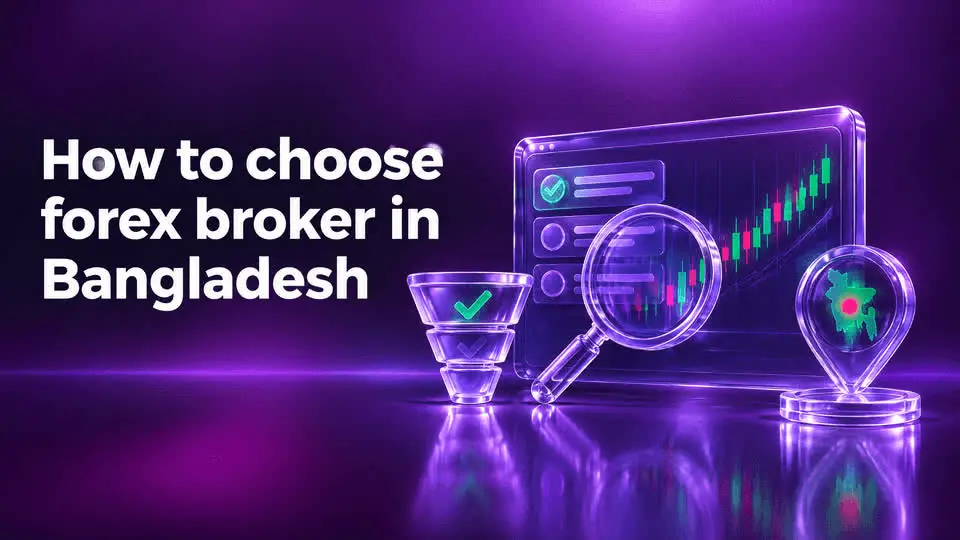
Choosing a broker is a decision people usually make in an afternoon, based on an advertisement, a friend's recommendation, or a YouTube video. In Bangladesh, where the legal position is restrictive, payment routes are difficult, and scams targeting new traders are common, that approach is expensive. Even when researching established brokers such as Tickmill, traders should first examine the relevant entity, regulatory status, costs, payment options, and applicable protections rather than relying on marketing claims.
A better approach is a structured process that starts with the questions most people skip, such as "should I do this at all?", and ends with an exit plan in case the broker stops working for you.
This guide gives you a 30-day plan in five stages. It is deliberately slow, because the cost of rushing is losing your deposit. It ends with a Forex Broker Regulation Checker Guide.
Bangladesh Bank regulates foreign exchange, and the Foreign Exchange Regulation Act, 1947 restricts payments to persons outside Bangladesh and foreign exchange dealings outside authorized channels. Bangladesh Bank has issued warnings against unauthorized online forex trading, and its stated position is generally understood to be restrictive for residents sending money offshore for speculative trading.
Enforcement against individual retail traders has reportedly been limited, and many Bangladeshis trade with overseas brokers. That is not authorization or protection, and rules may change. This article is educational and is not legal advice. Consult a qualified Bangladeshi lawyer or tax professional and check official Bangladesh Bank notices before opening an account.
Book a consultation with a qualified Bangladeshi lawyer or tax professional. Ask specifically about the legality of sending funds abroad for trading, the risks to your bank accounts, how income from trading would be treated for tax, and what records you should keep. Write down the answers. If the advice is that you should not proceed, respect it.
Trade only with money you can afford to lose entirely. Do not use loans, family savings, or funds needed for essentials. Consider how you would feel losing the whole amount. If the answer is "terrible", reduce the amount or do not trade.
Most beginners lose money in their first year. Treat the first months as education. A goal such as "complete 100 documented trades with disciplined risk management" is more useful than a monthly profit target.
Write your answers to these questions before you look at any broker.
These answers become your filter, so a broker is judged against your needs instead of its marketing.
Collect names from several sources, such as regulator registers, independent forums, and your own research. Treat affiliate review sites with caution because many are paid per referral. For each candidate, apply these knockouts and remove any that fail.
Aim for three to five survivors.
Run each survivor through the Forex Broker Regulation Checker Guide below, and keep screenshots and notes.
Send the same questions to each broker and compare answers and response times.
Evasive answers count against the broker.
Open a demo on the account type you would use. Check spreads, execution, platform stability, and the mobile app. Remember that demo results are usually better than live results.
If you decide to proceed after advice and verification, open a live account with a minimal amount.
Use a simple scorecard with weights, and give the heaviest weight to verified regulation and withdrawal reliability. A broker that fails the withdrawal test should not be chosen, regardless of cost.
Even after a successful test, start with a modest deposit and increase only after several months of reliable behavior, on both sides: the broker's and your own discipline.
Before you deposit, decide what would make you leave a broker and how you would do it.
Triggers to leave:
Exit steps:
Having this plan written in advance makes it easier to act calmly.
Run every shortlisted broker through this list.
Find the company name, registration number, and address in the client agreement and ask support which entity serves Bangladeshi clients.
Examples include the FCA register (UK), ASIC (Australia), CySEC (Cyprus/EU), FSCA (South Africa), and NFA BasiQ (United States). Match the name, license number, website, and status.
Verify the license is active and covers retail forex or CFD activities.
Get written confirmation of the entity that will hold your funds. Offshore sister companies often provide different protections.
Compare domains, emails, and phones with the register, and search regulator warning pages.
Look for repeated complaints about withdrawals or restrictions.
Confirm the reverse route works before adding more money.
How long should choosing a broker take? A careful process takes several weeks. Rushing is one of the main causes of losses.
Should I ask a lawyer before choosing a broker? Yes. The legal position in Bangladesh is restrictive, and advice from a qualified professional matters more than any broker comparison.
How much should I deposit first? Only an amount you can afford to lose entirely, and ideally a small test amount at first.
What if the broker asks me to pay a fee to withdraw? Treat it as a serious warning sign. Verify with the regulator and do not pay unexplained fees.
Can I switch brokers later? Yes, but withdrawing and moving funds involves costs and delays, so choose carefully at the start.
Choosing a forex broker in Bangladesh is a process of elimination and verification. Get legal and tax advice, define your needs, apply knockout rules, verify the exact entity on an official register, test with small amounts including a withdrawal, and keep an exit plan written down before you deposit.
This article is for educational purposes only and does not constitute legal, tax, financial, or investment advice. Forex trading carries a high level of risk. Laws and enforcement in Bangladesh may change, so check official Bangladesh Bank notices and consult a qualified local professional.