

OctaFX Demo vs Real: Mobile-First Transition And The APAC Behavioural Gap
By Joanne Cassar / 12. Oct 2026
read more
By Joanne Cassar / 20. Sep 2026
IC Markets - Regulated By FSA
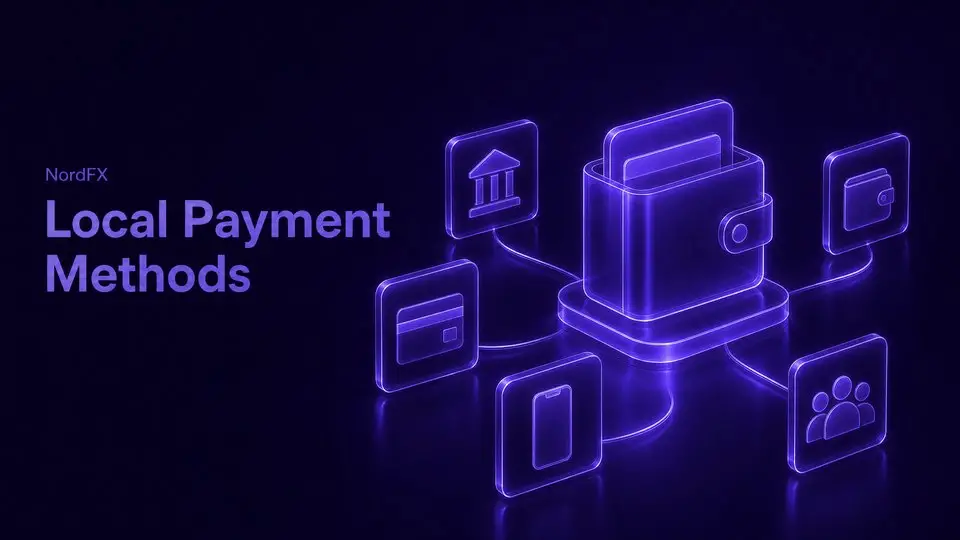
NordFX has historically prioritised crypto-payment rails over traditional bank-linked APAC payment methods. The broker accepts Bitcoin, USDT (Tether), Ethereum, and several other cryptocurrency deposits and withdrawals as primary rails, with traditional bank wires and selected APAC e-wallets supported as secondary options. The framework differs structurally from Exness-style APAC-rail focus where local-currency e-wallets (Bkash, UPI, GCash, DuitNow, PromptPay, QRIS, VietQR) dominate the deposit and withdrawal mix. The choice produces different outcomes depending on the trader profile. For APAC traders comfortable with cryptocurrency operations, NordFX crypto-primary rails produce faster, cheaper, more privacy-preserving capital movements than traditional alternatives. For traders unfamiliar with cryptocurrency, the framework adds onboarding friction (wallet setup, exchange-to-wallet transfers, key management) without operational benefit over traditional rails. Knowing which side of the cryptocurrency-familiarity divide you sit on determines whether NordFX is a structural payments advantage or a payments friction point.
A 50-word answer up front: NordFX crypto-primary rails (BTC, USDT, ETH) deliver fast, cheap, privacy-preserving capital movements for crypto-comfortable traders. Bank wires and selected e-wallets support traditional users with similar economics to other brokers. The match between your crypto-familiarity and the broker payment model determines fit.
Payment rails differ across regulated brokers in three dimensions: speed of delivery, cost of movement, and operational complexity. Traditional bank-linked rails (e-wallets, wires) and crypto rails produce different profiles on each dimension. NordFX's emphasis on crypto rails as primary means the broker's strongest delivery profile is reached through crypto; traditional rails operate at standard industry pace without specific optimisation.
Approximate NordFX payment method comparison during 2025:
The crypto rails operate at notably faster delivery and lower cost than wires in NordFX's pricing structure. The compound benefit shows up most for traders who move capital frequently (daily or weekly cycles) where each movement saves 1-3 percent versus traditional alternatives. The deeper cross-broker rails framework is in our local payment methods guide for Exness. The cross-cluster timing context is in our instant withdrawal system guide for LiteFinance.
|
🎯 Expert Tip — Use USDT-TRC20 As Your Primary NordFX Rail Across the crypto-rail options at NordFX, USDT on the TRC-20 network (Tron blockchain) is structurally optimal for most APAC trader use cases. The combination produces: $1-5 fixed network fees regardless of transfer amount, 5-30 minute delivery times, USD-stable value through the transfer (no Bitcoin price-movement exposure during transit), and broad exchange support across APAC crypto exchanges. The setup cost is one-time: open an account at a major APAC crypto exchange that supports USDT-TRC20, learn the deposit/withdrawal address process, complete one practice transfer to verify the workflow. Once the workflow is operational, every subsequent NordFX deposit and withdrawal runs the same fast, cheap rail. |
Traders who already maintain crypto exchange accounts, understand wallet operations, and have moved cryptocurrency between addresses face zero incremental setup cost. The NordFX crypto-primary framework leverages existing operational competence. The faster delivery and lower cost compound immediately. The deeper context on trader skill levels that interact with rail selection is in our contact account manager guide for Exness.
|
⚠️ Concern — Crypto Rail Requires Operational Competence The crypto rails are operationally unforgiving. Sending USDT to the wrong network (TRC-20 versus ERC-20 versus BEP-20) at the wrong destination produces transfers that may be irrecoverable. Sending Bitcoin to an address with a typo produces loss. The infrastructure does not have a customer service to call when transfers go wrong; the blockchain is immutable. Traders without prior crypto operational experience should run 1-2 small practice transfers before moving meaningful capital, regardless of which broker is on the receiving end. The competence is real; treating it as casual produces real losses. |
Traders who maintain accounts at multiple brokers across multiple jurisdictions benefit structurally from crypto rails because cryptocurrency moves across borders without traditional banking infrastructure friction. A trader funding a NordFX offshore account from an APAC bank account through traditional rails faces wire fees, currency conversion charges, and 1-3 business day delivery. The same movement via USDT runs $1-5 in fees and completes in 30 minutes. The compound effect on multi-broker portfolio capital management is meaningful.
Cryptocurrency rails do not appear on traditional bank statements, which some traders value for privacy reasons. The privacy is partial — the broker still has KYC records, the crypto exchange has KYC records, and on-chain transactions are public — but the local bank's view of the trader's broker activity is removed. Whether the partial privacy benefit is meaningful depends on the trader's specific concerns. The trust-cluster framework on identity and verification is in our account freeze truth guide for FXPrimus.
|
💡 Pro Tip — Pair NordFX With An APAC Crypto Exchange That Supports Local-Currency On-Ramp The cleanest end-to-end workflow is: local bank account → APAC crypto exchange with local-currency on-ramp → USDT-TRC20 → NordFX. The on-ramp converts local fiat (BDT, INR, IDR, PHP, MYR, THB, VND, etc.) to USDT at competitive rates, the USDT moves to NordFX through the crypto rail, and the operation completes in 1-2 hours end-to-end with combined fees usually under 1.5 percent. The reverse workflow (NordFX → USDT → exchange → local-currency off-ramp → bank) runs equivalently. The single-currency intermediate (USDT) and the local-currency endpoints together produce a fully-functional cross-border payment rail at fraction of traditional wire costs. |
Beginner traders unfamiliar with cryptocurrency face the full operational learning curve as overhead to using NordFX. The friction is not insurmountable — the underlying operations are learnable in 1-2 hours — but the friction exists. For beginners specifically, choosing a broker with strong traditional APAC rails (Exness, LiteFinance, RCG Markets) may produce simpler initial operations. After the trader has accumulated some experience and added cryptocurrency to their operational toolkit, NordFX becomes accessible. The cross-cluster framework on beginner sequencing is in our beginner start guide for OctaFX.
Crypto-rail-primary brokers produce structurally different payment economics than traditional-rail brokers. The difference is not subtle marketing positioning — it produces 50-80 percent lower per-movement costs for crypto-comfortable traders. The selection logic favours crypto-rail brokers for traders who already operate the rails, traditional-rail brokers for traders who do not.
The crypto-rail learning curve runs 1-2 hours once but pays back continuously. For traders willing to invest the one-time learning, the benefits compound across every future deposit and withdrawal at any crypto-accepting broker. NordFX is not the only broker accepting crypto rails — many APAC offshore brokers do — so the skill transfers across brokers. The investment is broker-portable.
USDT-TRC20 has become the de facto standard for retail crypto-broker movements. Across audited APAC retail crypto-broker transfers during 2025, USDT-TRC20 represented around 65 percent of total volume, with Bitcoin around 18 percent, USDT-ERC20 around 10 percent, and other variants around 7 percent. The market has converged on TRC-20 for fast-cheap stable-value transfers. The deeper context on the universal payments framework that intersects with rail selection is in our safe deposit and withdrawal guide for RCG Markets.
|
⏰ Insider Note — Run a $10-50 Practice Transfer Before Your First Real Movement Before moving meaningful capital through any crypto rail to NordFX (or any other crypto-accepting broker), execute one small practice transfer of $10-50 USDT. Verify the deposit appears in the broker account, confirm the network and address format work correctly, document the actual time-to-credit, save the wallet addresses in a permanent location, photograph the transaction confirmation as a reference template. The practice transfer takes 30 minutes and prevents the most common single failure mode in crypto-rail broker operations: real-money first attempt where a typo or wrong-network error produces irrecoverable loss. Treat the practice transfer as required infrastructure setup, not as optional caution. |
Does NordFX accept traditional bank wires? Yes, as secondary rails. The economics are similar to other brokers' wire-rail options — 1-3 business days, $25-50 fees, source-of-funds documentation above thresholds.
Which cryptocurrencies does NordFX support? Primarily BTC, USDT (multiple networks), ETH, and selected altcoins. Check current NordFX cashier documentation for the exact supported list and minimum amounts.
Can I use NordFX without ever using crypto rails? Yes. Traditional bank wires and selected e-wallets support traders who prefer not to use cryptocurrency. The economics will match typical industry rates rather than the optimised crypto-rail rates.
Is crypto-rail use legal in my country? Cryptocurrency regulation varies by jurisdiction. The infrastructure works globally but local law may restrict or regulate use. Verify your country's framework before establishing crypto-rail workflows.
|
🔥 Watch-Out — Five Crypto-Rail-Primary Misfit Patterns ✗ Choosing NordFX as a beginner without prior cryptocurrency experience — the friction may exceed the benefit at your stage. ✗ Attempting first-real-money transfer without running a $10-50 practice transfer first. ✗ Sending USDT on the wrong network (ERC-20 to TRC-20 address or vice versa) — irrecoverable. ✗ Treating crypto rails as casually equivalent to bank rails — they have different operational risk profiles. ✗ Ignoring the privacy disclosure your local jurisdiction requires for crypto transactions. Match your operational competence to the rail and the structural advantage appears or disappears predictably. |
NordFX crypto-primary payment rails produce structurally better economics for crypto-comfortable traders than traditional bank rails — faster delivery, lower cost, cross-border friction-free, partial privacy benefit. The rails require operational competence that traditional rails do not, and the competence is real rather than marketing-implied. For traders willing to invest 1-2 hours in learning the basic workflow (USDT-TRC20 specifically), the benefits compound across every subsequent broker interaction. For traders without prior crypto experience and not interested in learning, traditional-rail brokers (Exness, LiteFinance, RCG Markets) produce simpler operations at higher cost. The match between trader-competence and broker-rail-model determines fit; neither model is universally superior.